Find the English version below, just after the illustration
La théologie de la Libération prend au sérieux le contact direct des plus souffrants avec la Bonne Nouvelle. Par leurs propres expériences de vie et de morts, par leurs chemins de croix et de Vie, ils comprennent vite dans leurs tripes la révolution chantée avec amour et justesse par Marie dans le Magnificat. Ils plongent facilement dans l’accueil du Salut, comme les gens de mauvaises vies dans l’évangile. À ce titre, ils sont des interprètes des Écritures d’une redoutable pertinence. Ils bondissent de joie quand ils découvrent leur dignité intrinsèque aux yeux de Dieu, quand ils comprennent comment la Bible les pousse à briser le fatalisme de leurs misères & des oppressions subies, quand l’Évangile leur donne la force de briser les chaînes de leurs esclavages, aussi quand la Parole de Dieu cesse de faire d’eux des bénéficiaires passifs de la charité, offerte par les plus nantis dans leurs divers assistanats.
La théologie de la Libération veille à enlever tout ce que les riches mettent comme obstacles (d’abord idéologiques) entre les plus démunis et la Révélation de notre Salut ! Bienheureux suis-je quand je découvre que je suis pauvre et sauvé !…
Bienheureux sommes-nous en œcuménisme si nous pouvons reconnaître le charisme de petites Églises très dérangeantes par leur prosélytisme qui hérisse nos poils : elles parviennent souvent mieux que nous à mettre en contact la Bonne Nouvelle et les damnés de la terre. Bienheureux sommes-nous en œcuménisme si nous pouvons travailler main dans la main avec ces pasteurs ‘free-lance’ doués en pastorale bottom-up et non top-down.
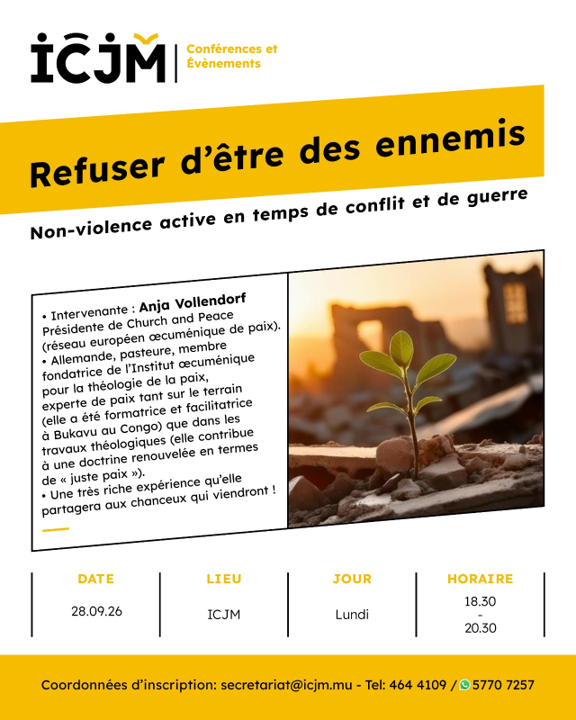
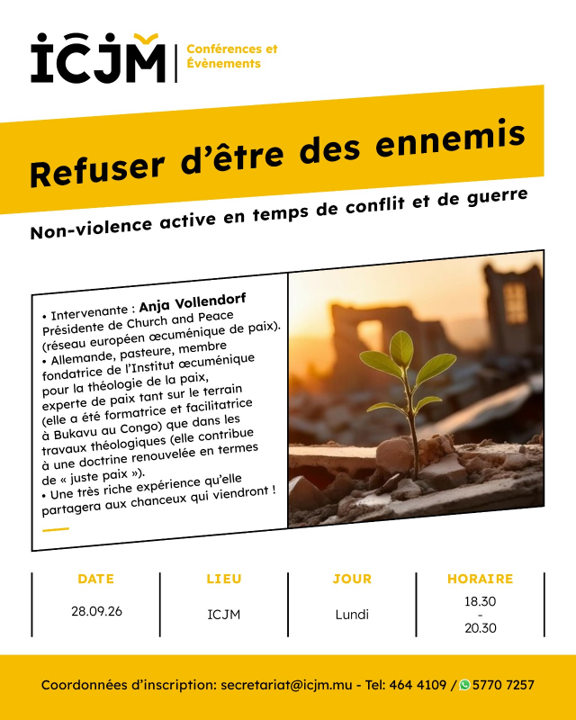
C’est ce que j’ai partagé ce 3 octobre 2026, à l’île Maurice, lors de la rencontre très conviviale accueillant parmi nous Anja Vollendorf, présidente de Church and Peace, avec plusieurs membres du Comité de travail Œcuménique. Merci à Françoise et David White (pasteur presbytérien) pour leur accueil. Merci à Mgr Ian Ernest (évêque émérite anglican) pour son témoignage durablement marquant !
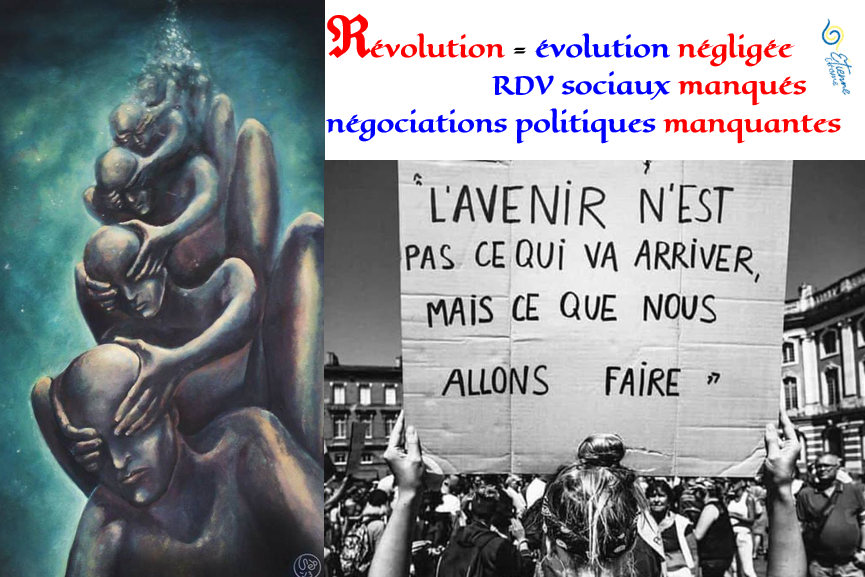
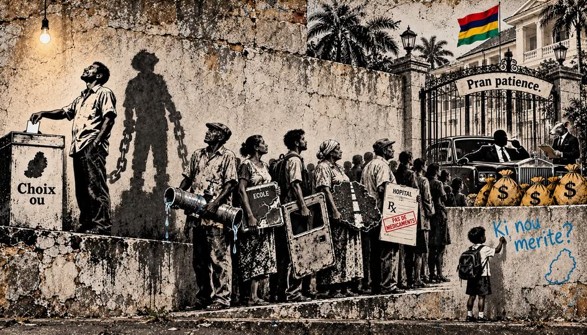
Partagé 2 semaines plus tard sur les réseaux sociaux, alors que les misérables gueux foutent le bordel… Illustration trouvée dans un post de Vayu Putra montrant comment l’esclavage continue à tous nous griffer encore aujourd’hui.
Liberation Theology takes seriously the direct encounter of those who suffer most with the Good News.
Through their own experiences of life and death, through their ways of the Cross and of Life, they quickly grasp in their very being the revolution sung with love and truth by Mary in the Magnificat. They readily embrace Salvation, just as the people of ill repute did in the Gospel. As such, they are interpreters of Scripture of formidable relevance. They leap for joy when they discover their intrinsic dignity in God’s eyes, when they understand how the Bible urges them to break the fatalism of their miseries and the oppression they have suffered, when the Gospel gives them the strength to break the chains of their bondage, and also when the Word of God ceases to treat them as passive recipients of the charity offered by the more affluent through their various forms of welfare.
Liberation Theology seeks to remove all the obstacles (primarily ideological) that the rich place between the most destitute and the Revelation of our Salvation! Blessed am I when I discover that I am poor and saved!…
Blessed are we in ecumenism if we can recognise the charism of small Churches that are highly disruptive through their proselytism, which makes our hair stand on end: they often succeed better than we do in bringing the Good News into contact with the wretched of the earth. Blessed are we in ecumenism if we can work hand in hand with these ‘freelance’ pastors who excel at bottom-up rather than top-down pastoral care.
This is what I shared on 3 October 2026 in Mauritius, during a very convivial gathering which welcomed amongst us Anja Vollendorf, President of Church and Peace, along with several members of the Ecumenical Working Committee. Thank you to Françoise and David White (a Presbyterian minister) for their hospitality. Thank you to the Rt Rev Ian Ernest (Anglican Bishop Emeritus) for his deeply memorable testimony!
Shared two weeks later on social media, whilst those wretched beggars are causing a right old mess… Illustration found in a post by Vayu Putra showing how slavery continues to scar us all even today.